Common Arrangement Of Work Sections For Building Works Pdf Editor
Creating a Works Cited list using the eighth edition. MLA has turned to a style of documentation that is based on a general method that may be applied to every possible source, to many different types of writing. Get this from a library! Common arrangement of work sections for building works. [Building Project Information Committee.; Co-ordinated Project Information (Programme);].
The CAWS classification down to the level of work section titles forms one of the fifteen tables of the Uniclass classification scheme. ISBN 250 Subjects • Bills of quantities • Legal issues and management • Specifications • Cost planning and control Publisher History CPIC is responsible for providing best practice guidance on the content, form and preparation of construction production information, and making sure this best practice is disseminated throughout the UK construction industry. Information NBS NBS has produced specification systems and information products for construction industry professionals for more than 40 years.
• All horizontals converge to a point on the, which is a horizontal line at eye level. • Verticals converge to a point either above or below the horizon. The basic categorization of artificial perspective is by the number of vanishing points: • where objects facing the viewer are orthogonal, and receding lines converge to a single vanishing point. • reduces distortion by viewing objects at an angle, with all the horizontal lines receding to one of two vanishing points, both located on the horizon. • introduces additional realism by making the verticals recede to a third vanishing point, which is above or below depending upon whether the view is seen from above or below. The normal convention in architectural perspective is to use two-point perspective, with all the verticals drawn as verticals on the page.
The axonometric view is not readily generated by CAD programmes which create views from a three dimensional model. Consequently, it is now rarely used. Detail drawings [ ] Detail drawings show a small part of the construction at a larger scale, to show how the component parts fit together. They are also used to show small surface details, for example decorative elements. Section drawings at large scale are a standard way of showing building construction details, typically showing complex junctions (such as floor to wall junction, window openings, eaves and roof apex) that cannot be clearly shown on a drawing that includes the full height of the building. A full set of construction details needs to show plan details as well as vertical section details. One detail is seldom produced in isolation: a set of details shows the information needed to understand the construction in three dimensions.
Typical scales for details are 1/10, 1/5 and full size. In traditional construction, many details were so fully standardised, that few detail drawings were required to construct a building. For example, the construction of a would be left to the carpenter, who would fully understand what was required, but unique decorative details of the facade would be drawn up in detail. In contrast, modern buildings need to be fully detailed because of the proliferation of different products, methods and possible solutions. Architectural perspective [ ]. Two point perspective, interior of Dercy House by, 1777. In drawing is an approximate representation on a flat surface of an image as it is perceived by the eye.
[ ] An is a short film showing how a proposed building will look: the moving image makes three-dimensional forms much easier to understand. An animation is generated from a series of hundreds or even thousands of still images, each made in the same way as an architectural visualisation. A computer-generated building is created using a CAD programme, and that is used to create more or less realistic views from a sequence of viewpoints. The simplest animations use a moving viewpoint, while more complex animations can include moving objects: people, vehicles, and so on.
Draughtsmen worked standing up, keeping the ink on a separate table to avoid spilling ink on the drawing. [ ] Developments in the 20th century included the drawing board, as well as more complex improvements on the basic T-square. The development of reliable allowed for faster draughting and stencilled lettering. Dry transfer lettering and half-tone sheets were popular from the 1970s until [ ] computers made those processes obsolete. [ ] CGI and computer-aided design [ ].
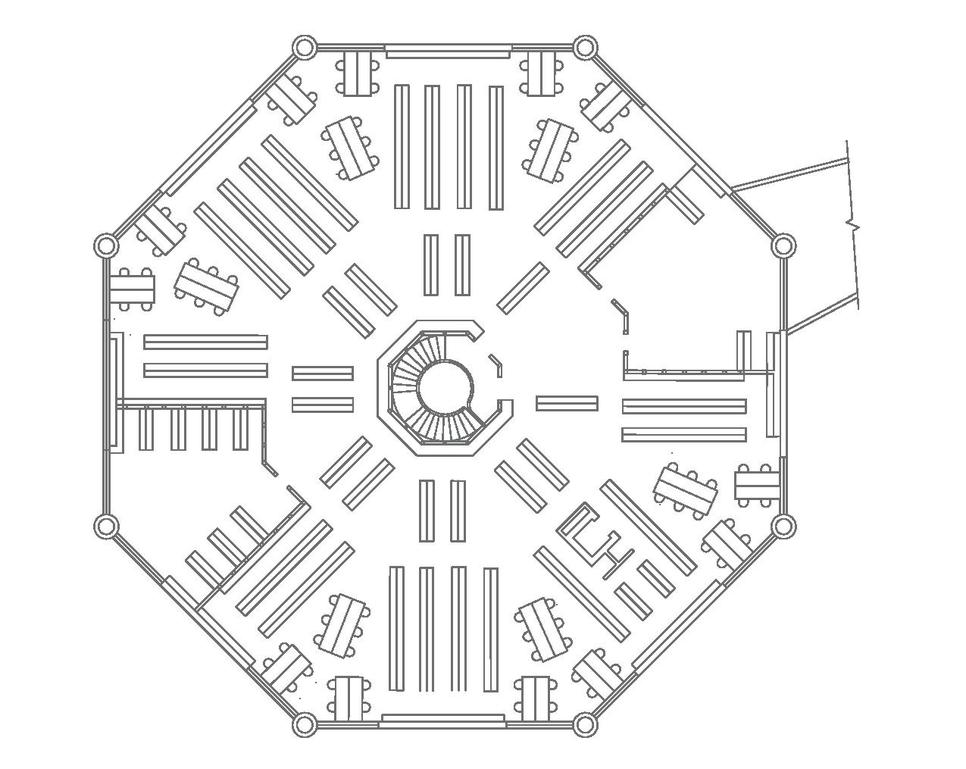
Principal floor plans of the, Greenwich (UK). Floor plan [ ] A is the most fundamental architectural, a view from above showing the arrangement of spaces in building in the same way as a, but showing the arrangement at a particular level of a building. Technically it is a horizontal section cut through a building (conventionally at four feet / one metre and twenty centimetres above floor level), showing walls, windows and door openings and other features at that level.
The Amber document status indicator indicates that some caution is needed when using this document - it is either: • (a) current in the Construction Information Service but has a document or documents that replace or amend it, so please look at the 'Newer Versions' tab or • (b) not in the Construction Information Service but with another reason why it may be relevant to our customers such as being cited in NBS or in the Building Regulations Approved Documents. Again there may be more recent versions of the document.
Three-point perspective gives a casual, photographic snapshot effect. In professional, conversely, a or a is used to eliminate the third vanishing point, so that all the verticals are vertical on the photograph, as with the perspective convention.
On a one-eighth inch to one foot scale drawing, the one-eighth divisions on the ruler can be read off as feet. Architects normally use a with different scales marked on each edge. A third method, used by builders in estimating, is to measure directly off the drawing and multiply by the scale factor. Dimensions can be measured off drawings made on a stable medium such as vellum. All processes of reproduction introduce small errors, especially now that different copying methods mean that the same drawing may be re-copied, or copies made in several different ways. Consequently, dimensions need to be written ('figured') on the drawing. The disclaimer 'Do not scale off dimensions' is commonly inscribed on architects drawings, to guard against errors arising in the copying process.
This popular and well-established book has been rewritten to conform to the seventh edition of the Standard Method of Measurement of Building Works (SMM7) The author explains in detail the practical measurement of building works, using some twenty-five worked examples covering all the main building components, supplemented by extensive explanatory notes that clarify the basic principles and show how they are best interpreted and applied. As in previous editions, a chief aim has been to emphasise the usefulness of the book as a practical student guide to the measurement of relatively simple building work.
The key innovation here is to share the model via the internet, so that all the design functions (site survey, architecture, structure and services) can be integrated into a single model, or as a series of models associated with each specialism that are shared throughout the design development process. Some form of management, not necessarily by the architect, needs to be in place to resolve conflicting priorities. The starting point of BIM is spatial design, but it also enables components to be quantified and scheduled directly from the information embedded in the model.
Customers range from governments and multinational companies to smaller companies and technical professionals in more than 180 countries. IHS has been in business since 1959 and employs more than 3,500 people in 35 locations around the world.
The key concepts here are: • Perspective is the view from a particular fixed viewpoint. • Horizontal and vertical edges in the object are represented by horizontals and verticals in the drawing. • Lines leading away into the distance appear to converge at a.
Architectural Press: Elsevier 2007. • Thomas W Schaller, Architecture in Watercolour.
The process was superseded by the dye-line print system which prints black on white coated paper (). The standard modern processes are the, and, of which the ink-jet and laser printers are commonly used for large-format printing. Although colour printing is now commonplace, it remains expensive above A3 size, and architect's working drawings still tend to adhere to the black and white / greyscale aesthetic. See also [ ] Wikimedia Commons has media related to. Bertoline et al.
• An uses a plan grid at 30 degrees from the horizontal in both directions, which distorts the plan shape. Isometric graph paper can be used to construct this kind of drawing. This view is useful to explain construction details (e.g.
Bmw scanner 1.4.0 software download. After digging on the web site you find a PDF file. It is due in part to the Common Arrangement of Work Sections structure.building works and the purpose is to ensure that bills of quantities BoQ fully describe. The Common Arrangement of Work Sections CAWS has been adopted as. Index 3 List of Standards for Sections 1, 5, 6, 7, 8, 9, 15 25. Building Works, the General Conditions of Contract for Design and Build. B The species scientific names and Chinese common names.
Project to rational ize and simpl ify the rules of measurement for buil ding works. All ow buildi ng prof essional s to use a common database containing. Of a proposed building, such as the Common Arrangement of Work Sections CAWS CPI.The Association for Co-ordinated Building Information in New Zealand ACBINZ.
Laurence King Publishing 2007. Page 57, definition of axonometric drawing • ^ W. McKay: McKay's Building Construction. Donhead Publishing 2005. A new reprint of the combined three volumes that McKay published between 1938 and 1944.
You can help Wikipedia.
In daylight, as an ordinary object gets further from the eye, its contrast with the background is reduced, its colour saturation is reduced, and its colour becomes more blue. Not to be confused with or bird's eye view, which is the view as seen (or imagined) from a high vantage point. In J M Gandy's perspective of the Bank of England (see illustration at the beginning of this article), Gandy portrayed the building as a picturesque ruin in order to show the internal plan arrangement, a precursor of the cutaway view. A image is produced by superimposing a perspective image of a building on to a photographic background. Care is needed to record the position from which the photograph was taken, and to generate the perspective using the same viewpoint. This technique is popular in computer visualisation, where the building can be rendered, and the final image is intended to be almost indistinguishable from a photograph. Sketches and diagrams [ ].
The classification of work sections is separate from, and complementary to, the classification of other concepts such as building types, elements, construction products and properties/characteristics. Uniclass, published in 1997, is the definitive overall classification tables, one of which is for work sections for buildings, comprising the Common Arrangement group, sub-group and work section headings. See also [ ] • • • External links [ ] • This article about a book on or is a.
There are many advantages to this system: repetition is reduced because complex elements can be copied, duplicated and stored for re-use. Errors can be deleted, and the speed of draughting allows many permutations to be tried before the design is finalised. On the other hand, CAD drawing encourages a proliferation of detail and increased expectations of accuracy, aspects which reduce the efficiency originally expected from the move to computerisation. [ ] Professional CAD software such as is complex and requires both training and experience before the operator becomes fully productive. Consequently, skilled CAD operators are often divorced from the design process. Simpler software such as and Vectorworks allows for more intuitive drawing and is intended as a design tool.
MXit on YOUR Mobile MXit works on over 2000 different mobile phones including yours, so nothing stops you from chatting smarter today. Mxit lite java download.
Together they describe what is required to complete the Works in accordance with the Contract. If the Work Sections describe the nature of the work to be done, then what is contained in the Preliminaries? The layout of NBS is based on the classification document Common Arrangement of Work Sections for Building Works (CAWS) published by the. This describes Preliminaries as: Preliminary and general information and information relating to the Works as a whole; items for the Contractor’s general costs; provisional sums and other items for work by others or subject to later instruction. The Code of Procedure which accompanies SMM7, the Standard Method of Measurement for building works, notes that the Preliminaries section contains those items that are not specific to work sections but have an identifiable cost which is useful to consider separately in tendering. In short, Preliminaries relate to the cost-significant items required by the method and particular circumstances under which the work is to be carried out, and those costs concerned with the whole of the works rather than just Work Sections. These costs may either be ‘one-off’ fixed costs, such as the cost of bringing to site and erecting site accommodation (and subsequent removal) or time-related, such as the heating, lighting and maintenance cost for that accommodation.
The plan view includes anything that could be seen below that level: the floor, stairs (but only up to the plan level), fittings and sometimes furniture. Objects above the plan level (e.g. Beams overhead) can be indicated as dashed lines. Geometrically, is defined as a vertical of an object on to a horizontal plane, with the horizontal plane cutting through the building. Site plan [ ] A is a specific type of plan, showing the whole context of a building or group of buildings.
In connection with day-to-day maintenance work, planned maintenance work and. Repositioning of the fire hose shall be arranged by a Specialist.
Carry out all work necessitated by any failure in the above arrangements or.Some SMM7 Work Sections and subsec tions were renumbered and new Work Sections. Common A rrangement for B uil ding Works 2nd editi on, 1998 vii.This GS consists of three Sections viz.